



Harpy lirystyczne
47 products
 Skip to content

47 products
Niezależnie projektujemy i rozwijamy premium Harfy liry, wyposażone w nasz autorski system strojenia Harfy liry trzeciej generacji dla doskonałej jakości dźwięku i wydajności.
Odkryj ponad 20 najlepszych marek produktów Harfa lira dostępnych na sprzedaż. Od początkujących po profesjonalistów. Lira to instrument strunowy, o mniejszym rozmiarze i charakterystycznym kształcie, z bogatą historią sięgającą tysięcy lat. Harfa, o większych rozmiarach, dzięki swoim rezonującym strunom wytwarza szeroką gamę tonów, które mogą wypełnić każde pomieszczenie urzekającymi melodiami. Zarówno Harfa lira, jak i Harfa oferują unikalne doświadczenia gry i możliwości muzyczne. Jej delikatne struny i czarujący dźwięk czynią ją symbolem piękna i gracji. Gra na harfie lirze może przenieść Cię do świata melodii i wywołać poczucie spokoju.
Pochodzenie harfy liry można śledzić na wschodzie, w tym w starożytnej Mezopotamii, Egipcie, Syrii, Anatolii i Lewancie, a także w Europie. Najwcześniejszy obraz siedmio-strunowej liry pojawia się na sarkofagu z Hagia Triada z okresu mykeńskiego, podkreślając jej historyczne znaczenie. W organologii harfy liry definiuje się jako lutnie jarzmowe, z strunami przymocowanymi do jarzma składającego się z dwóch ramion i poprzeczki, gdzie płaszczyzna strun leży równolegle do pudła rezonansowego. Harfa lira była zwykle grana przez szarpanie palcami lub szarpanie kostką, a niektórzy potomkowie, jak bizantyjska lyra, były później grane smyczkiem. Nowoczesne harfy liry często mają wygrawerowane nuty umieszczone nad strunami, co ułatwia śledzenie filmów instruktażowych i naukę gry. Prostota harfy liry sprawia, że jest dostępna dla początkujących; na przykład konkretne nuty mogą być używane w terapii dźwiękiem do pracy z czakrami i wspierania dobrostanu. Strojenie jest ważne dla harfy liry, a użycie chromatycznego stroika zapewnia dokładność. Każdy instrument jest strojony wielokrotnie przed wysyłką, aby zagwarantować jakość. Układ nut zwykle umieszcza najniższą strunę po lewej stronie, a niektóre techniki gry wykorzystują jedną rękę do szarpania, podczas gdy wolna ręka tłumi niechciane struny (tłumienie wolną ręką). Harfa lira należy do rodziny instrumentów zwanych lirami, z innymi instrumentami i potomkami ewoluującymi z oryginalnego projektu. Drewno można polerować, aby utrzymać jego wygląd i jakość dźwięku. Historycznie harfa lira była używana do akompaniamentu śpiewu podczas ceremonii religijnych i kulturalnych, a rozwój stylów muzycznych, takich jak muzyka żydowskiego kultu, jest ściśle związany z jej użyciem.
Harfa lira to fascynujący instrument strunowy z bogatą historią sięgającą początków cywilizacji. Pochodząca z antyku, harfa lira pojawiła się po raz pierwszy w starożytnej Grecji i Mezopotamii, gdzie odgrywała centralną rolę w muzyce, kulturze i opowiadaniu historii. Rozpoznawalna dzięki eleganckiej formie — zwykle z dwoma ramionami połączonymi poprzeczką — harfa lira jest grana przez szarpanie strun palcami lub kostką. Jej delikatny, melodyjny dźwięk i wdzięczny kształt uczyniły ją ulubieńcem muzyków i miłośników muzyki przez wieki. Z czasem harfa lira ewoluowała, pojawiły się różne adaptacje i style w różnych kulturach, z których każda wnosiła unikalne brzmienie i technikę gry. Dziś harfy liry nadal zachwycają publiczność, oferując ponadczasowe połączenie z muzyką i sztuką przeszłości.
Historia harfy liry zaczyna się ponad cztery tysiące lat temu, a najwcześniejsze znane przykłady odkryto w starożytnej Mezopotamii około 2700 p.n.e. W starożytnej Grecji lira stała się ikonicznym instrumentem, często granym podczas ceremonii, festiwali i recytacji poetyckich. Była czymś więcej niż tylko narzędziem muzycznym — była symbolem mądrości, harmonii i artystycznej inspiracji, często kojarzoną z bogiem Apollinem. Kulturowe znaczenie liry jest widoczne w starożytnej sztuce i literaturze, jak słynny sarkofag z Hagia Triada, który przedstawia muzyka grającego na siedmio-strunowej lirze. Na przestrzeni dziejów harfa lira towarzyszyła śpiewakom i gawędziarzom, wplatając muzykę w codzienne życie i praktyki duchowe. Dziś jej dziedzictwo trwa, gdy muzycy na całym świecie nadal grają i celebrują lirę, honorując jej bogatą historię i ponadczasowy urok.
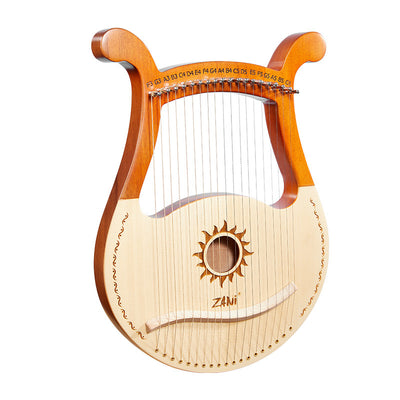
Harfy liry są natychmiast rozpoznawalne dzięki swojemu charakterystycznemu kształtowi, składającemu się z dwóch pionowych ramion połączonych poprzeczką, z naciągniętymi strunami na tej samej płaszczyźnie. Pudło rezonansowe, często wykonane z wysokiej jakości drewna, takiego jak klon czy mahoń, wzmacnia rezonujące tony instrumentu. Harfy liry występują w różnych rozmiarach i konfiguracjach strun, z popularnymi modelami posiadającymi od siedmiu do szesnastu lub więcej strun. Same struny mogą być wykonane z metalu lub nylonu, a każdy materiał wpływa na unikalne brzmienie instrumentu. Gra na harfie lirze polega na szarpaniu strun palcami lub kostką, podczas gdy wolna ręka tłumi niechciane struny, pozwalając muzykom tworzyć czyste, ekspresyjne melodie. Dzięki swojej przenośności i prostemu designowi harfy liry są odpowiednie zarówno dla początkujących, jak i doświadczonych muzyków, oferując prostą, a zarazem satysfakcjonującą przygodę muzyczną.
Obcowanie z harfą lirą przynosi wiele korzyści muzykom na każdym poziomie zaawansowania. Kojące tony i delikatne wibracje instrumentu pomagają stworzyć uspokajającą atmosferę, co czyni ją idealną do relaksu, medytacji i terapii dźwiękiem. Gra na harfie lirze sprzyja koncentracji i cierpliwości, gdy muzycy uczą się koordynować ręce i doskonalić technikę. Akt tworzenia muzyki na lirze stymuluje kreatywność i rozwija zdolności motoryczne, a nauka nowych melodii może poprawić pamięć i funkcje poznawcze. Niezależnie od tego, czy szukasz spokojnej ucieczki, nowego twórczego wyrazu, czy sposobu na pogłębienie wiedzy muzycznej, harfa lira to instrument, który przynosi radość, spokój i poczucie spełnienia każdemu grającemu.
Wybór najlepszej harfy liry dostosowanej do Twoich potrzeb wymaga rozważenia kilku istotnych czynników. Dla początkujących harfa lira z mniejszą liczbą strun — na przykład siedmioma lub dziesięcioma — może być łatwiejsza w obsłudze i wygodniejsza do gry. Rozmiar i waga instrumentu powinny również odpowiadać Twojemu stylowi gry i komfortowi fizycznemu. Zwróć uwagę na materiały użyte do konstrukcji; drewna takie jak klon i mahoń są cenione za trwałość i bogate brzmienie. Stabilność strojenia i łatwość regulacji są kluczowe, zwłaszcza dla osób początkujących w instrumentach strunowych. Przeglądanie tutoriali online, czytanie recenzji i oglądanie nagrań występów na platformach takich jak YouTube pomoże Ci porównać różne modele i znaleźć najlepszą harfę lirę na Twojej muzycznej drodze. Poświęcając czas na badania i wypróbowanie różnych opcji, odkryjesz lirę, która zainspiruje Cię do gry, tworzenia i czerpania radości z muzyki przez wiele lat.
Harfa/Celtic Harfa to duży instrument strunowy z pudłem rezonansowym, zaprojektowany do wytwarzania bogatych, ciepłych tonów. Zazwyczaj wyposażona w struny nylonowe, znana jest ze swojego eleganckiego wyglądu i kojącego dźwięku.


