Skip to content



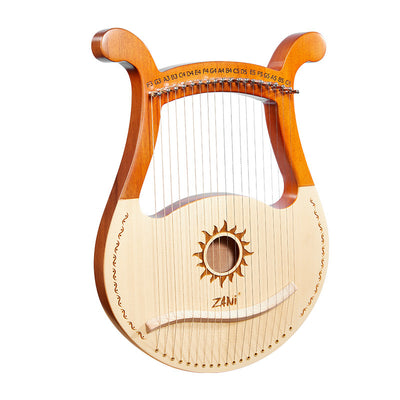


Pures Music Lyre Athena Top-level Professional Lyre Instrument
- Free worldwide shipping
- Trust badge
- Secure payments
- Photo-Verified Fulfillment i
- In stock, ready to ship
This is a Lyre that subverts tradition. Revolutionary tuning system. Original and unique design.
★ Quick tuning in 5-10 minutes even for beginners. A traditional lyre might take 1-2 hours of patient effort.
★ Accurate tuning system. After the strings are fixed, they will not loosen or go out of tune.
★ Perfect sound quality and sustain (back extension strings can improve sustain)
★ For professional players, the back extension string can show your rich creativity and skills.
★ Comes with a dedicated stand, it can be placed on the desktop. You can put it on your leg for support when playing, and you won’t feel tired even if you play for a long time.
The perfect lyre, fixed string structure, even string spacing, fine workmanship, different thickness of each string. Stable scale and sound quality. Extended strings on the back make the expression richer. Provides new possibilities for musicians to explore music.
Size: 46x34x3.8cm / 18.1x13.4x1.5 in
Weight: 1.9kg / 4.2lbs / 68oz
Scale: F3, G3, A3, B3, C4, D4, E4, F4, G4, A4, B4, C5, D5, E5, F5, G5
Packing list:
1 * Lyre
1 * Lyre stand
1 * Premium Carrying Case
2026 Restock Notice: The Pures Music Lyre Athena will be back in stock on June 5. If you’ve been eyeing this instrument, now is the perfect time to secure yours!
Exclusive Loyalty Reward:
For our valued returning customers who have placed an order of $60+ with us before 2026, please make sure to use the same email address at checkout. Your special discount will be applied automatically.
Thank you so much for your continued support!


The Best Lyre Instrument for All Skill Levels: A Comprehensive Guide
Introduction to Lyre Instruments
-
The lyre is a stringed musical instrument with a rich history dating back to ancient times, originating from classical antiquity in Mesopotamia, Egypt, and Europe. The lyra, an ancient stringed instrument from the Mediterranean and Middle Eastern regions, is considered a historical predecessor or variant of the lyre.
-
Lyres are characterized by their two arms and a crossbar, belonging to the lute family of instruments, and are ordinarily played by plucking (plucked) the strings with fingers or a plectrum.
-
The earliest known examples of ancient lyres date back to c. 2700 BCE, recovered in Mesopotamia, and they have evolved over time, influencing various musical styles and instruments, including the Greek lyre and African lyres.
-
Lyre harps offer a unique playing technique, with the free hand silencing unwanted strings, and are known for their soothing sound, making them a popular choice for professional musicians and music therapy.
-
The best lyre harp for beginners is often one with fewer strings, such as a 7-string lyre, and is made from high-quality materials, including wood and nylon strings.
-
So far, it has developed to the third generation. We (Pures Music) have developed the third generation tuning system for Lyre Harp. It solves the problem of Lyre Instrument keeping in tune.
History and Cultural Significance
-
The lyre has a significant cultural and historical importance, dating back to ancient Greece, where it was a symbol of harmony and wisdom, often associated with the god Apollo. In Greek mythology, other gods such as Hermes, who is said to have invented the lyre, and Aphrodite, who was often depicted with lyres in artistic representations, also had connections to this instrument, highlighting its divine status among the gods.
-
In ancient Greece, the lyre was an iconic instrument associated with ceremonies, festivals, and poetic recitations.
-
In ancient times, lyres were used to accompany singing and storytelling, and were an integral part of ancient Greek music and culture.
-
The earliest picture of a lyre is from the sarcophagus of Hagia Triada, highlighting its importance in ancient civilizations.
-
Lyres have been used in various cultures, including ancient Mesopotamia, Egypt, and Europe, and have evolved over time, influencing the development of other stringed instruments such as the harp and lute.
-
The lyre’s cultural significance extends beyond its musical use, as it has been a symbol of artistry and creativity throughout history.
Characteristics of Lyres
-
Lyres are characterized by their two arms and a crossbar, with strings attached to a yoke in the same plane as the sound table.
-
The soundbox of a lyre is typically made from wood, and the strings can be made from nylon or metal, with nylon strings producing a softer, more mellow tone.
-
Lyre harps come in a variety of sizes and string configurations, with common models featuring anywhere from seven to sixteen or more strings. The lyre harp offers a range of benefits and opportunities, including relaxation, sound therapy, and creative expression.
-
Lyres can have a varying number of strings, ranging from 7 to 16, and are played using a plectrum or fingers.
-
The playing technique of a lyre involves plucking the strings with the right hand, while the left hand silences unwanted strings, creating a unique and expressive sound.
-
Lyres are known for their gentle vibrations, which are believed to have therapeutic benefits, and are often used in music therapy and sound healing. Playing the lyre can evoke a sense of tranquility, creativity, and even spiritual fulfillment, enhancing emotional well-being and focus.
Choosing the Best Lyre
Selecting the best lyre harp is a personal journey that depends on your musical goals, experience level, and the type of music you wish to explore. For beginners, a lyre with 7 to 10 strings is often ideal, as it offers a manageable introduction to the world of ancient inspired musical instruments while still allowing for a variety of melodies. Lyres strung with nylon strings are especially popular for their gentle, soothing sound, making them perfect for those seeking a calming musical experience or wishing to play ancient Greek music and classical antiquity pieces.
When evaluating lyres, pay close attention to the quality of the soundbox and the craftsmanship of the strings. A well-constructed soundbox enhances resonance and ensures your instrument produces a rich, full sound. For those aiming to perform or compose more complex music, or for professional musicians, a lyre with a greater number of strings and advanced features can open up a wider range of playing techniques and musical styles.
A chromatic tuner is an essential tool for keeping your lyre in perfect tune, ensuring that each string delivers the intended note and harmonizes beautifully with the others. Consider the type of music you want to play—some lyres are designed specifically for ancient Greek or classical antiquity music, while others are more versatile for modern compositions. Ultimately, the best lyre is one that inspires you to play, explore, and express your artistry, serving as a gateway to the world of music and creativity.
Types of Lyres
-
There are several types of lyres, including the Greek lyre, African lyres, and bowed lyres, each with its own unique characteristics and playing techniques.
-
The Greek lyre is a modern reconstruction of the ancient Greek lyre, and is known for its rich, resonant sound and intricate playing technique.
-
The round lyre, which has a rounded base, reappeared in ancient Greece between 1700 and 1400 BCE.
-
African lyres are known for their bright, percussive sound and are often used in traditional African music and dance.
-
Bowed lyres are a type of lyre that is played with a bow, rather than a plectrum or fingers, and are known for their smooth, legato sound.
-
Other types of lyres include the giant lyre, box lyre, and bowed lyre, each with its own unique characteristics and playing techniques.
Lyre Playing Techniques
Mastering lyre playing techniques is both an art and a journey through history. Traditionally, the lyre is played by plucking the strings with the fingers or with a plectrum held in the right hand, while the left hand is used to silence unwanted strings, allowing clear melodies to emerge. This unique approach, developed in ancient Greece, enabled musicians to accompany singing and storytelling with expressive, harmonious music.
To begin, tune your lyre using a chromatic tuner to ensure each string is set to the correct pitch. Start by practicing simple scales and melodies, focusing on using your free hand to mute strings that are not part of the melody. As you gain confidence, experiment with more advanced playing techniques, such as creating harmonics or exploring the use of a bow—a method that dates back to ancient times and produces a smooth, sustained sound.
The earliest known examples of lyre playing techniques reveal a rich tradition of artistry, where musicians would accompany poetry, song, and even dance. Today, these techniques continue to evolve, allowing players to express a wide range of emotions and musical ideas. With patience and regular practice, you can develop your own style, mastering the interplay between fingers, plectrum, and free hand to create music that resonates with the spirit of antiquity and your own personal artistry.
Maintenance and Care
-
Lyres require regular maintenance and care to ensure optimal sound quality and playing performance.
-
The strings should be tuned regularly, using a chromatic tuner, and replaced as needed to maintain proper string tension.
-
Using a chromatic tuner ensures tuning accuracy for lyre harps.
-
The soundbox and strings should be cleaned and polished regularly to maintain their appearance and sound quality.
-
The lyre should be stored in a dry, cool place, away from direct sunlight and moisture, to prevent damage and warping.
-
Regular maintenance and care can help extend the life of the lyre and ensure optimal playing performance.
Lyres in Therapy and Education
-
Lyres are often used in music therapy and education, due to their soothing sound and gentle vibrations.
-
The playing technique of a lyre can help develop fine motor skills, hand-eye coordination, and musical expression.
-
The gentle vibrations of a lyre harp promote relaxation by slowing heart rate and calming the nervous system.
-
Lyres can be used in a variety of therapeutic settings, including sound healing, music therapy, and special education.
-
The use of lyres in education can help students develop musical skills, creativity, and self-expression, as well as provide a unique and engaging learning experience. Through playing the lyre, students can discover new inspiration and personal growth.
-
Lyres can also be used in sound baths and meditation, providing a relaxing and calming atmosphere for participants. Sheet music tailored for lyre is available to support learning and practice in educational settings.
Getting Started with Lyre Playing
-
Getting started with lyre playing requires a combination of practice, patience, and dedication.
-
Begin by learning the basics of lyre playing, including tuning, playing technique, and music theory.
-
Step-by-step tutorials with fast-loading HD videos and crystal clear sound help beginners learn to play the lyre harp.
-
Start with simple melodies and exercises, and gradually progress to more complex pieces and techniques.
-
Consider taking lessons from a qualified teacher or instructor, who can provide guidance and feedback on your playing technique and progress.
-
Study the techniques and performances of top players in the field of lyre playing for inspiration and guidance.
-
Practice regularly, using a metronome and tuner to help improve your timing and pitch accuracy.
Conclusion
-
The lyre is a unique and expressive musical instrument, with a rich history and cultural significance.
-
Lyres offer a wide range of playing techniques, sounds, and styles, making them a popular choice for musicians and music enthusiasts.
-
Whether you’re a beginner or an experienced musician, the lyre can provide a rewarding and enjoyable playing experience, as well as a unique and expressive sound.
-
The soothing tones of the lyre harp can help lower cortisol levels, promoting emotional healing and mindfulness.
-
With regular practice, patience, and dedication, you can master the art of lyre playing and enjoy the many benefits and rewards that it has to offer.
-
The lyre’s soothing sound and gentle vibrations make it an ideal instrument for music therapy, sound healing, and relaxation, and its unique playing technique and expressive sound make it a popular choice for musicians and composers.