 Skip to content



Learn How to Play the Ocarina: A Simple Guide
Summary
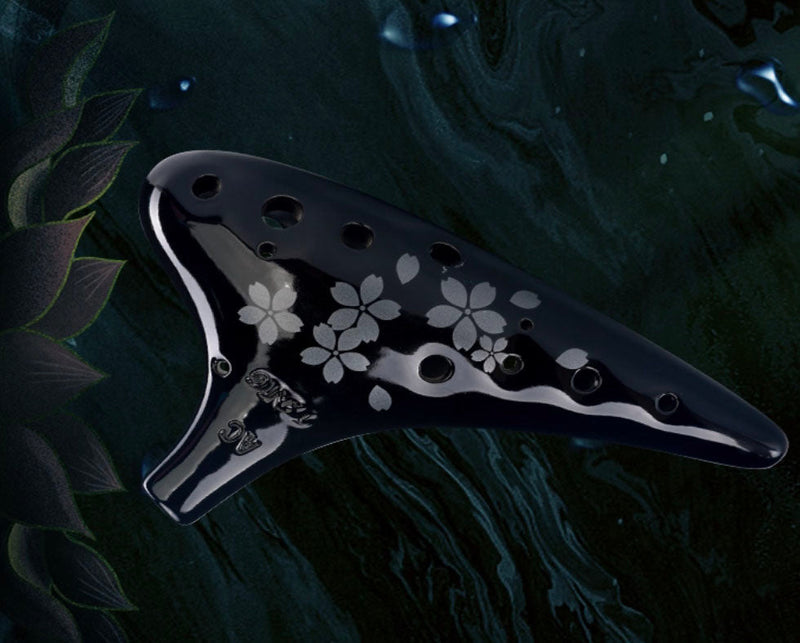
Want to learn how to play the ocarina? You’re in the right place. This guide starts with holding the instrument, mastering breath control, and playing your first notes. We’ll then dive into advanced techniques. All you need to get started making music with your ocarina.
Key Takeaways
-
Proper holding technique is essential; fingers should cover holes entirely to ensure a smooth sound.
-
Mastering breath control using diaphragmatic breathing is the key to producing a clear and stable tone.
-
Practicing long tones and familiarizing yourself with basic music notation will boost your playing confidence and skill.
Getting Started with Ocarina Holding

Before playing notes on the ocarina, learning how to hold it properly is necessary. Follow these steps:
-
Approach the ocarina with your hands from opposite directions.
-
Position the left hand with the palm facing you.
-
Position the right hand with the palm facing away.
-
Use the pads of your right-hand fingers to cover the top holes.
-
Use your right thumb to cover the largest hole at the bottom.
This positioning ensures that you can easy cover and uncover the chance holes as needed.
It’s important to find a comfortable grip when holding the ocarina:
-
The ocarina should balance between your right thumb and pinky finger when held parallel to the ground.
-
Keep your fingers relaxed and gently curved to cover the holes effectively.
-
Avoid curling your fingers back, as this makes it more challenging to cover the holes quickly and accurately.
-
Keep the thumb straight and in a horizontal position for better support.
Make sure the holes are covered entirely with the fine pads of your fingers, not partially. Lifting your fingers too high while running can hinder performance and increase the likelihood of miscovering holes, which breaks the flow of your playing. If your fingers are blocked too high, it can further complicate the fingering process, which is wrong. The way this technique is played is crucial for maintaining control.
Positioning the left pinky finger at an angle can provide extra support, especially for higher notes. With this solid foundation, mastering breath control is the next step.
Mastering Breath Control
Breath control is key to producing beautiful sounds on the ocarina. Start by using diaphragmatic breathing, which involves breathing deeply into your belly rather than your chest. Maintain an upright posture to enhance lung capacity and breath support, crucial for playing long tones.
To play the ocarina properly:
-
Shape your lips as if saying ‘boo’.
-
Rest the mouthpiece gently against your lips.
-
Use a small, moderate-sized lip aperture to direct airflow effectively into the ocarina.
-
Avoid gripping the mouthpiece with your lips to maintain proper airflow.
This lip shape, called embouchure, is crucial for producing a clean mouth sound.
Managing breath pressure is key to playing the correct notes on the ocarina. The correct breath pressure ensures well-controlled pitch and volume. Blow too hard and the sound may become sharp; too softly and it might sound weak or produce a high-pitched screech. Practicing these techniques will lead to more stable pitch and sound quality.
Next, explore the breath curve and its significance.
Exploring the Breath Curve
The breath curve is a fascinating aspect of ocarina playing that illustrates how the air pressure must adjust across the instrument’s range to maintain a clear tone and proper tuning. Each ocarina has a unique breath curve, influencing the required air pressure changes for different pitches. Understanding this curve ensures consistent sound quality.
As notes ascend in pitch, the necessary air pressure typically increases significantly. This means you’ll need to blow harder for higher notes while maintaining control to avoid screeching. The physical characteristics of the ocarina, such as chamber volume and sound hole size, also affect its breathing curve.
Experimenting with ocarinas from various makers helps you understand how their breath curves impact sound and technique. Practicing with different ocarinas allows you to observe these variations and adapt your playing.
Mastering the breath curve equips you to play notes across the entire range of your ocarina with precision. Understanding the breath curve, it’s time to play your first notes.
Playing Your First Notes

Playing your first notes on the ocarina is an exciting milestone. Beginners often start with simple melodies like ‘Mary Had a Little Lamb’. Many folk tunes are accessible for ocarina players due to their simplicity. Breaking down melodies into smaller segments makes learning challenging songs more manageable.
To improve your music playing skills:
-
Ensure proper finger sealing over the holes for clear sounds.
-
Familiarize yourself with basic music notation to aid in playing popular songs.
-
Learn to read sheet music gradually, starting with simple rhythms and pitches.
-
Listen to recordings to internalize melodies and rhythms before playing.
Practicing with easier song collections tailored for beginners builds confidence. As you become more comfortable playing notes and simple melodies, you’ll be ready to learn about articulating notes with tonguing techniques.
Articulating Notes with Tonguing
Tonguing is the technique used to start and stop airflow when playing notes. Single tonguing is the primary technique, articulating notes by saying ‘Tu’ and extending the sound. This method helps create clear and distinct notes, especially for faster passages.
Varying the duration of tonguing creates different articulations, such as staccato and staccatissimo. Double tonguing combines two articulations, using both the front and back of the tongue to achieve faster note sequences. Mastering these techniques improves the clarity and expressiveness of your playing.
Now, let’s look at recognizing musical phrases.
Recognizing Musical Phrases

Recognizing musical phrases is crucial for playing clear and expressive music. A phrase in music is a complete idea made from groups of notes. Musical phrases often have a consistent length, typically lasting around two bars in 4/4 time. Listen for where the singer breathes and gaps in the music in your favorite songs to understand phrasing.
Phrases in music are often indicated by longer notes at the end, signaling the conclusion of a melodic idea. Gaps in the music and repetition of melodic elements help identify distinct phrases. To enhance musical expression, focus on varying the pauses between notes instead of just maintaining a consistent rhythm.
Articulation involves distinguishing notes while playing, similar to punctuation in writing. Different styles and techniques include:
-
Legato and staccato, which convey musical phrases effectively.
-
Emphasizing the first note of each phrase to create clearer distinctions.
-
Using vibrato as an embellishment to enhance musical quality.
Practicing with a metronome helps achieve precise timing in starting slow notes as they blend with the tuner beat. With a good grasp of musical phrases, let’s troubleshoot some common issues.
Troubleshooting Common Issues
Breath control is crucial for producing clear notes and correct pitch. Blow harder if your sound is flat; blow softer if it is sharp. Improper finger positioning can lead to hand pain and difficulty playing. Using a mirror helps check the positioning of your hands, ensuring correct posture while playing.
Addressing these common issues makes your playing more comfortable and improves your sound. Next, let’s discuss the importance of practicing long tones.
Practicing Long Tones

Practicing long tones develops steady breath control and engages abdominal muscles, supporting sustained notes. Belly breathing is effective for playing the ocarina, maintaining a steady airflow. When breathing correctly, your shoulders should not rise, indicating good breath control.
Key factors for producing a good sound while playing a note include:
-
Holding your breath at a consistent pressure
-
Maintaining a straight posture to improve breath control and play longer without interruption
-
Ensuring good overall posture to maximize airflow, especially when playing high notes
Practicing long tones strengthens breath control and enhances overall sound quality and note stability. With this practice, you’ll be ready to advance your skills further.
Advancing Your Skills
To take your ocarina playing to the next level, explore some advanced techniques. The ‘Spider-Man’ technique allows players of a soprano C ocarina to achieve an overtone G7, extending their playable range beyond the standard limits. The ‘Milt Technique’ can consistently reach higher notes on a 12-hole alto C ocarina, though results may vary between instruments.
For the 12-hole soprano C ocarina, the ‘Spider-Man’ method allows players to reach higher notes by altering finger positions during overblowing. The ‘Milt Technique’ is popular among jazz ocarinists to extend the range of a 12-hole alto C, allowing access to higher notes with specific hand positioning.
Advanced ocarina playing includes techniques for achieving dynamics through underblowing and overblowing notes to create variations in volume and pitch. Mastery of the ocarina involves understanding that advanced techniques often depend on the unique characteristics of each individual instrument. Mastering advanced techniques often involves individual experimentation, as the effectiveness of methods can vary from one instrument to another.
With these advanced skills, you’re ready to learn some cool popular songs.
Learning Popular Songs

Songs such as Zelda’s lullaby, song of time, and Saria’s song are not only iconic but also relatively simple, making them perfect for practice. You might need to refer to a picture of the note fingerings when learning songs on the ocarina. This visual aid can help you remember the correct positions and make the learning process smoother.
Many players find it helpful to learn new songs by ear, especially when unfamiliar with reading sheet music. Listening to the tunes and trying to replicate them can be a fun and effective way to enhance your skills. By learning popular songs, you’ll improve your technique and enjoy playing music that resonates with many.
Now, let’s summarize what we’ve learned.
Summary
Learning to play the ocarina can be a rewarding and enjoyable experience. By mastering the basics of holding the instrument, controlling your breath, and understanding the breath curve, you lay a solid foundation for playing beautiful music. As you progress, playing your first notes, articulating with tonguing techniques, and recognizing musical phrases will enhance your musicality.
Advancing your skills with techniques like the ‘Spider-Man’ and ‘Milt Technique’, and learning popular songs will keep you motivated and engaged. Remember, practice makes perfect, so keep playing and exploring new melodies. Happy ocarina playing!
Frequently Asked Questions
How do I hold the ocarina properly?
You should hold the ocarina with your left hand facing you and your right hand facing away, using the pads of your fingers to cover the holes completely. This grip will help you play better and get the best sound out of it!
Why is breath control important in ocarina playing?
Breath control is super important in ocarina playing because it helps you manage pitch and volume, ensuring you hit clear notes with steady sound quality. Basically, it’s what makes your music sound good!
What is the breath curve?
The breath curve shows how you need to adjust your air pressure on the ocarina to keep your tone clear and in tune across different notes. It's all about finding that sweet spot!
How can I improve my note articulation on the ocarina?
To nail your note articulation on the ocarina, practice tonguing techniques like single and double tonguing to control your airflow better. This will help you create clearer, more distinct notes.
What are some popular songs to learn on the ocarina?
If you're looking to learn the ocarina, give "Zelda's Lullaby," "Song of Time," and "Saria's Song" a shot. They're fun, iconic, and perfect for beginners!